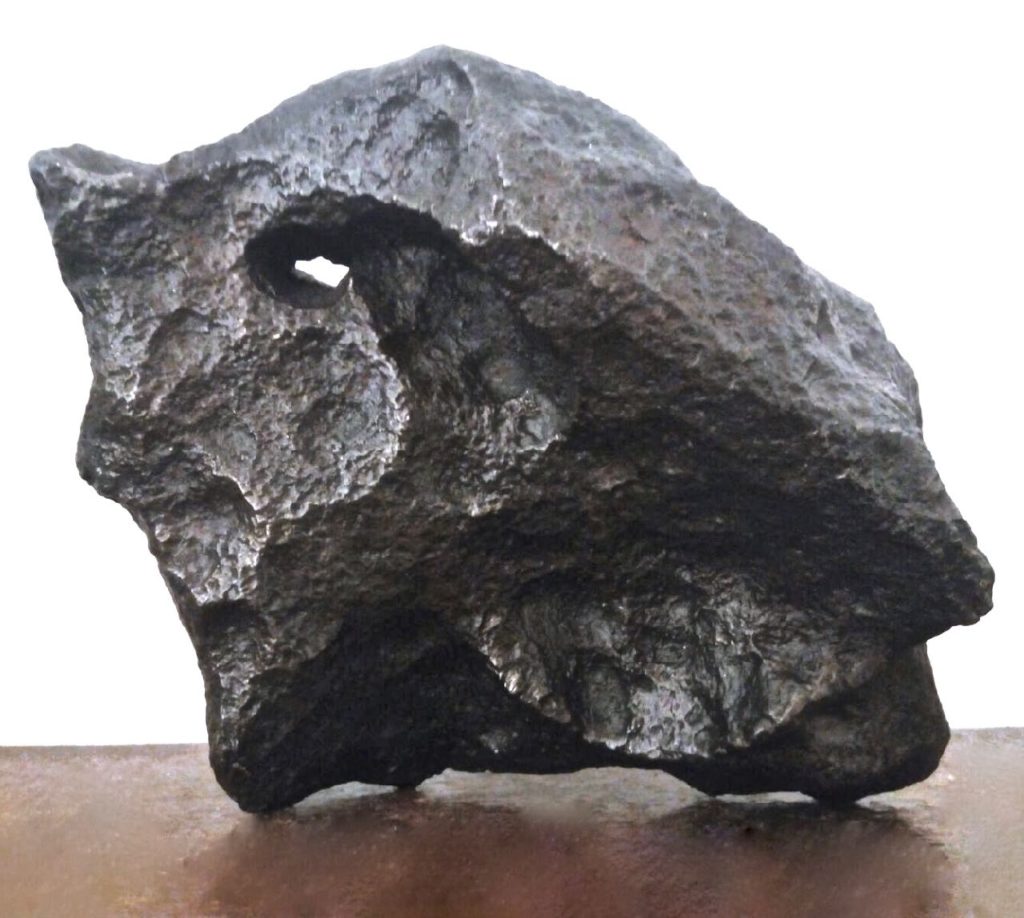
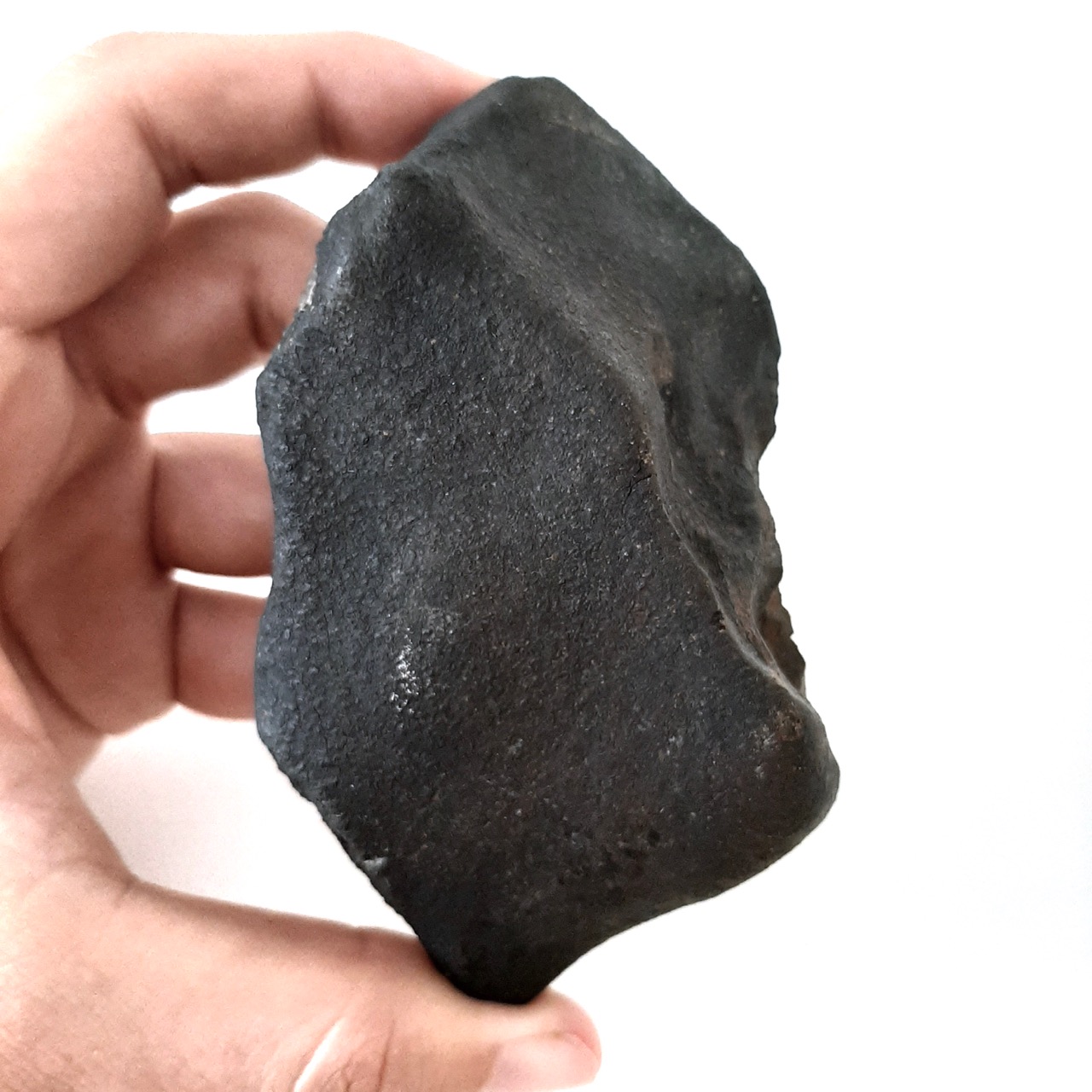
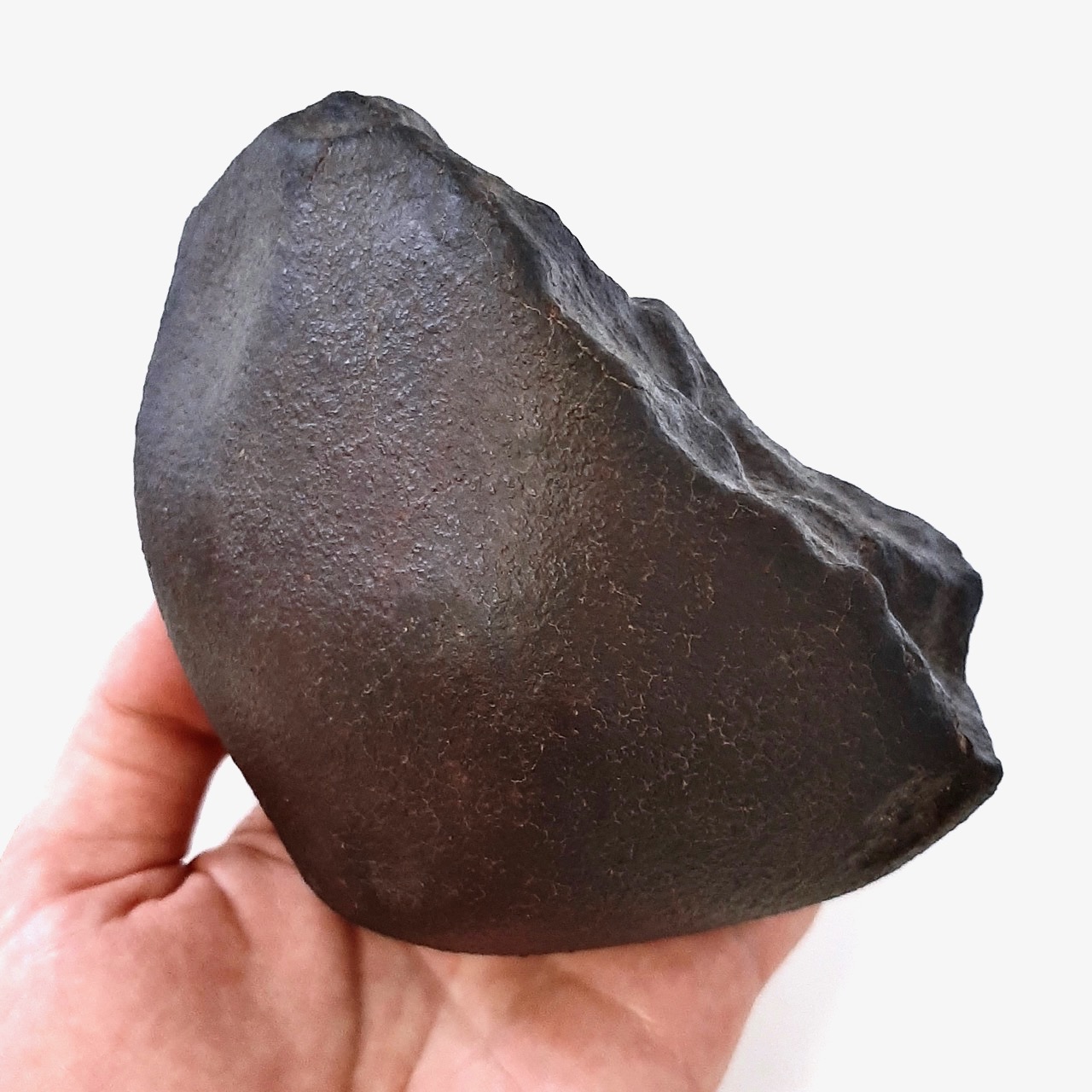
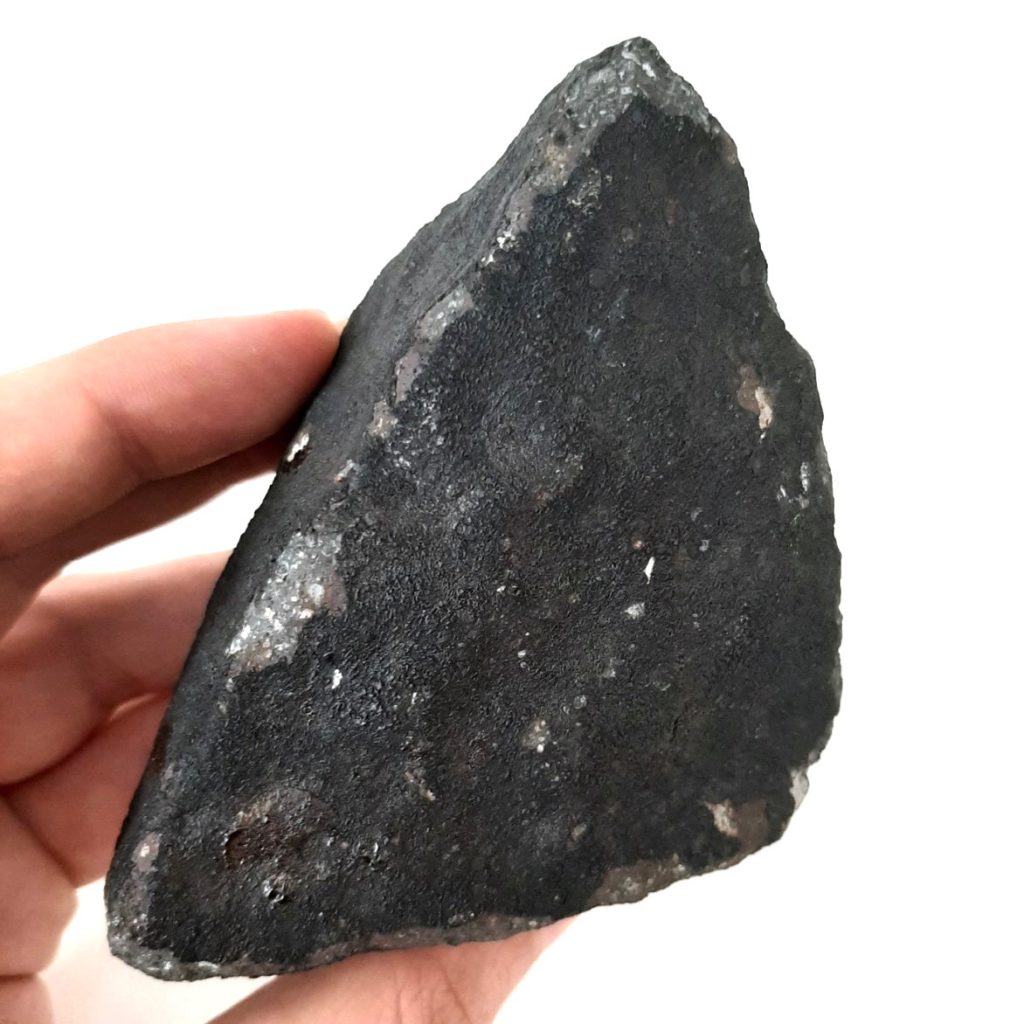
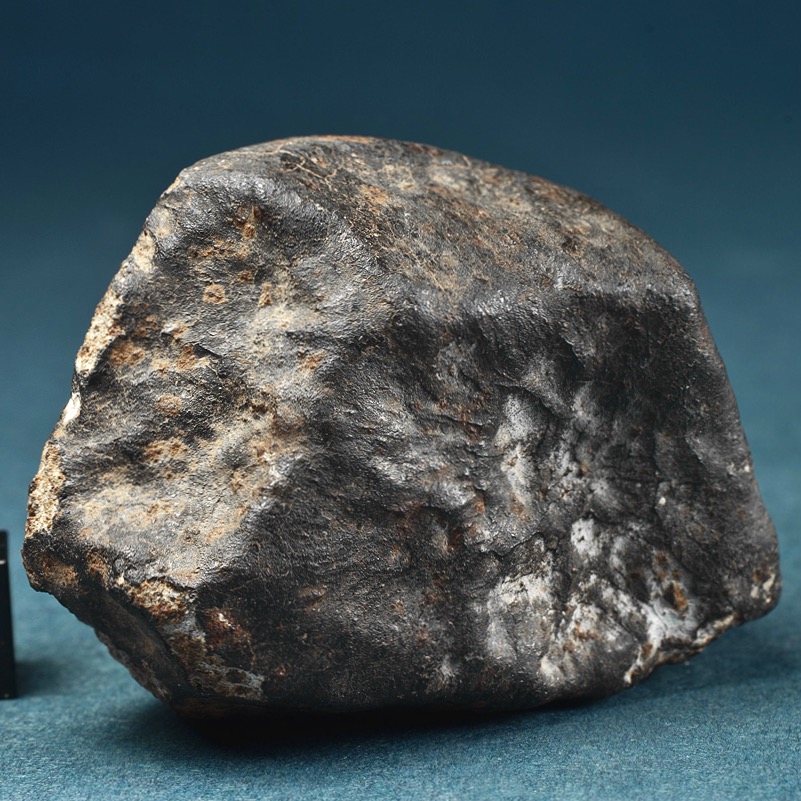
Campo del Cielo is an iron meteorite that fell 4800 years ago in the current Argentina. Its fireball was so bright that stories about it passed from one generation to another. When Spaniards arrived at the place, they were told by the locals that the sky had fallen, hence its name.
On August 4th or 5th 1998, a meteorite fall was witnessed on a mountain near of Zag, Morocco, in the border with Western Sahara. Around 175 kg were found and subsequently sold by locals. Zag is an ordinary chondrite H3-6 and regolith breccia.
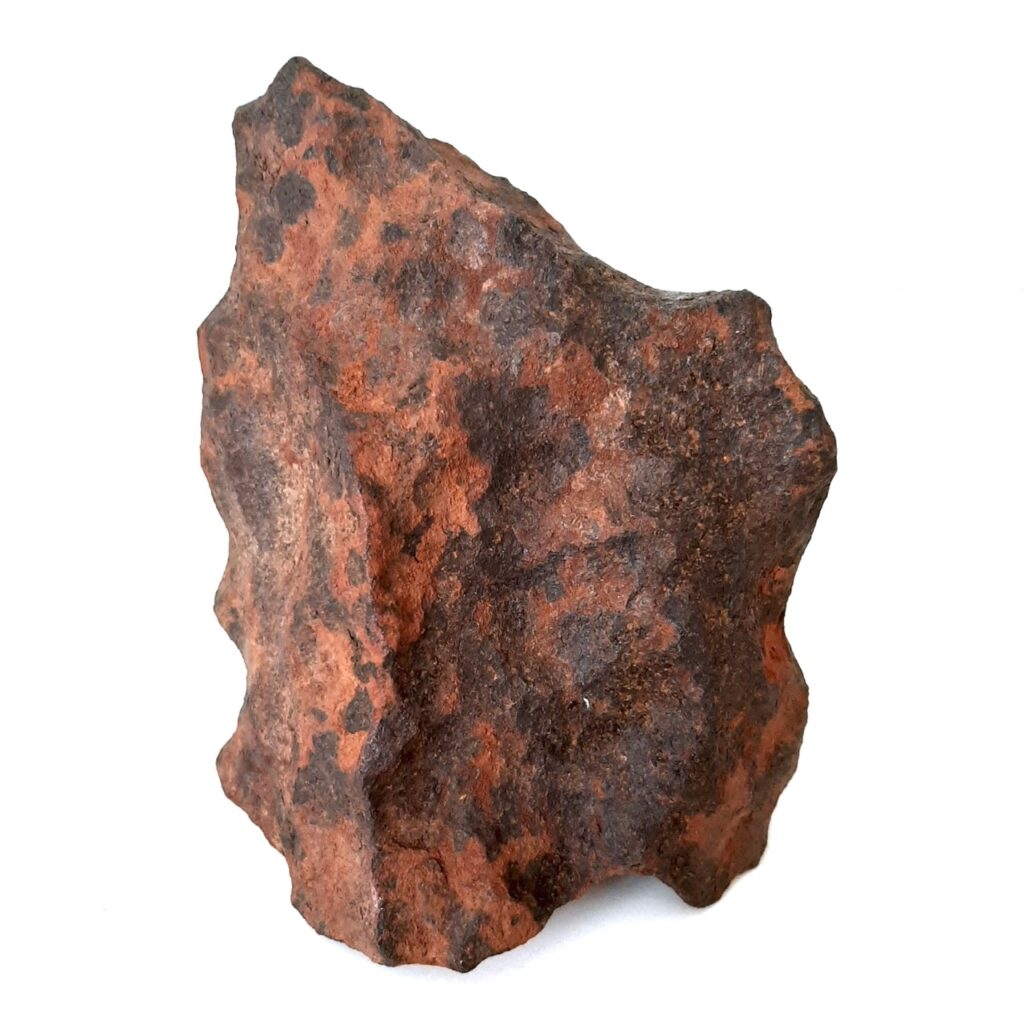
The natives have a legend that the craters were formed during a fiery explosion; they call the place “Chindu chinna waru chingi yabu” which means “Sun walk fire devil rock”. It indicates that the theory that Henbury is a witnessed fall is more than likely. Moreover, it has been estimated that this iron has been on Earth for approximately 4200 years. Due to its characteristics it is classified as a IIIAB iron meteorite. The Henbury meteorite was found in Australia in 1931 for the first time by occidentals. The crater field is situated 11 km west-southwest of Henbury Cattle Station in the heart of arid Central Australia. It is known to have caused 13 to 14 craters ranging from 7 to 180 meters (23 to 591 ft) in diameter and up to 15 meters (49 ft) in depth. Shortly after the discovery, large quantities of this meteorite were removed from the area, and over the years the site has been almost completely cleaned. As a result, most of the area has been closed by the government and collecting is forbidden now.
On February 15, 1997 at 23:23 local time, a shower of small stones with over 1000 individuals fell near the Yellow River in China, 500 km south of Beijing. A brilliant fireball with smoke and sparks terminated in a loud, resonating explosion. The fall ellipse measured 10,5 x 4,3 km, oriented east-west. Juancheng meteorites instantly became an important collectible in China. Chinese meteorite and fossil dealers quickly went to the Juancheng site where they met hundreds of children with pieces they already found. Many specimens were given to Communist Party leaders. However, some material still made it to the West. The largest recovered piece weighed 2,7 kg, and the total mass is over 100 kg. Juancheng is classified as an ordinary chondrite H5.
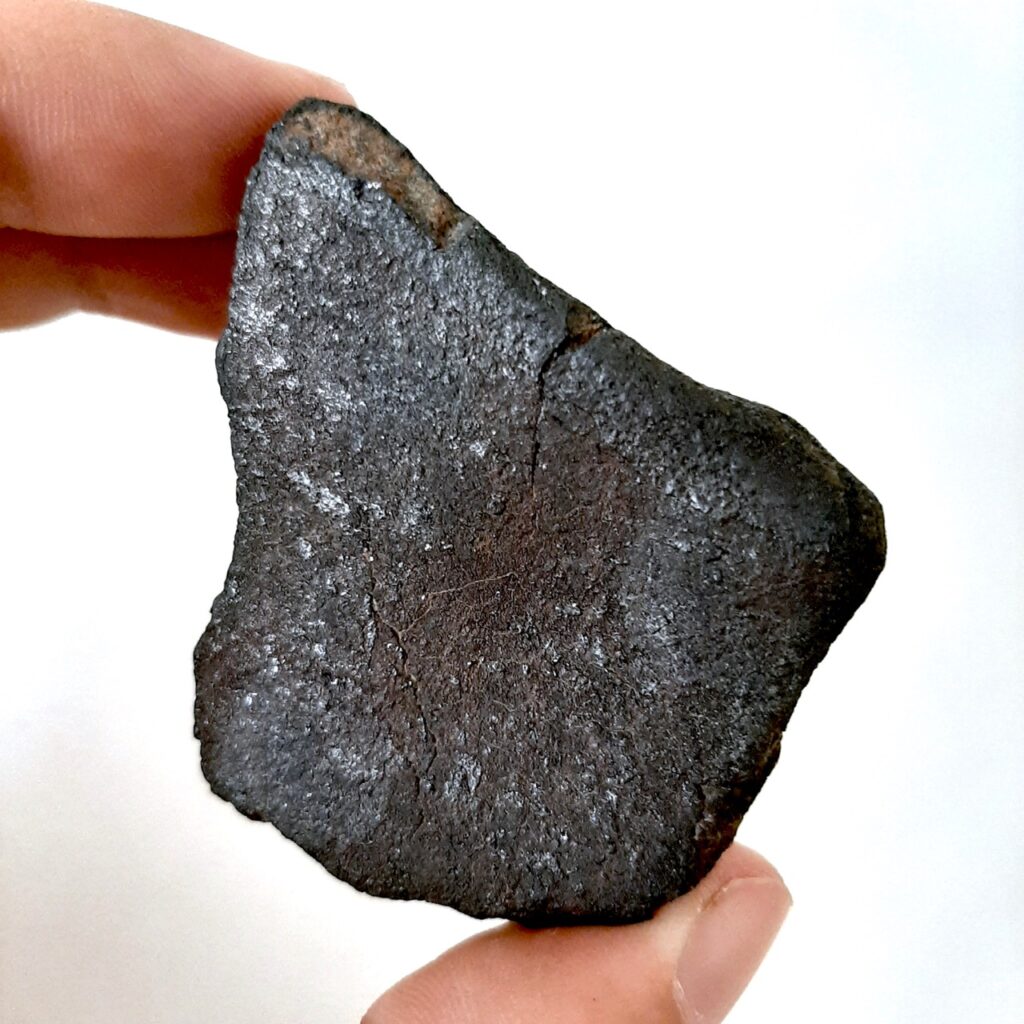
Bechar 006 is a lunar meteorite that comes from the Sahara desert, near the border between Morocco and Algeria and it was found in 2022. This slice comes from the main mass that was 2600g.
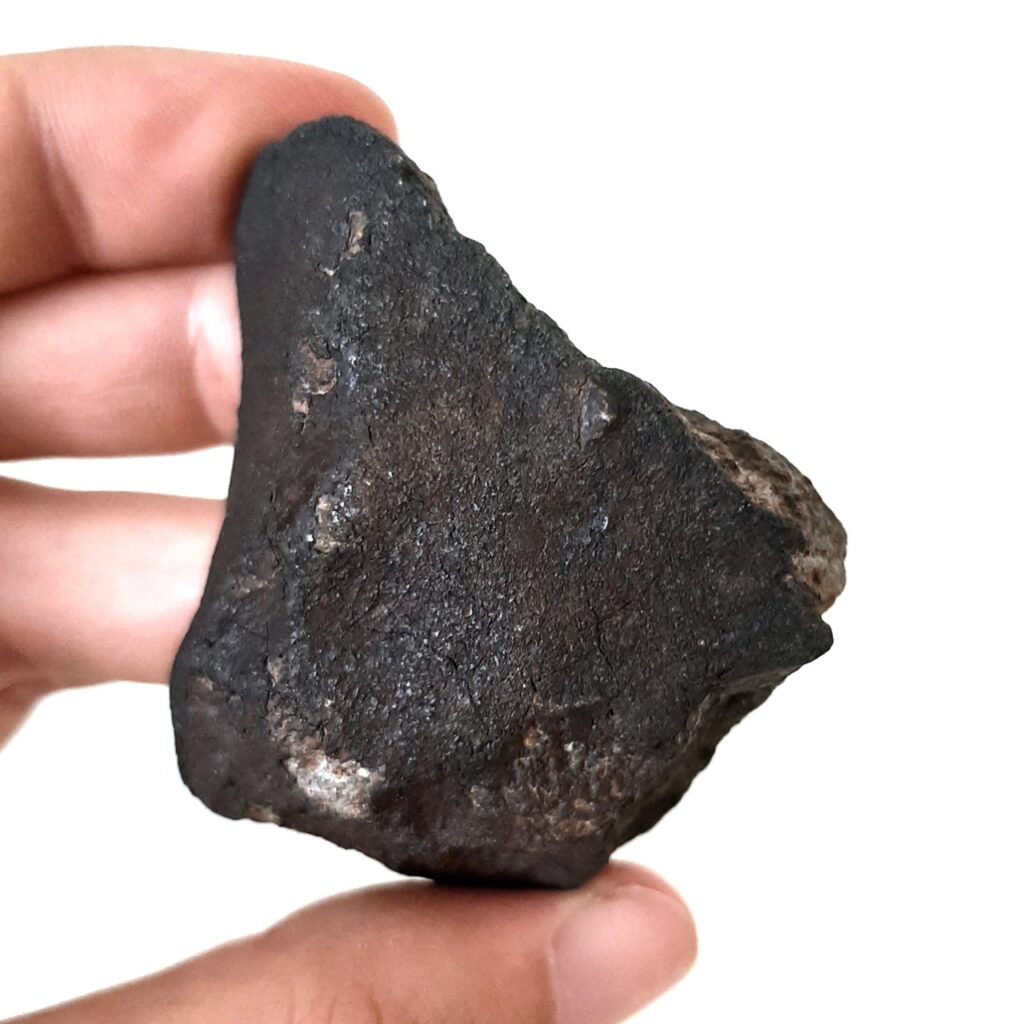
In July 2007 african nomads reported in Mali a smoke cloud and some detonations but no fireball was seen. This meteorite fall happened on the 2nd or 3rd of July but exact day is undetermined. In autumn and winter of the same year many fragments were finally found with a total known weight of about 100 kilograms. It is an H5 chondrite. This piece is remarkably fresh, complete and oriented.
The Allende meteorite is one of the most fascinating and sought-after meteorites available to collectors. It is a rare witnessed fall of a carbonaceous chondrite. The fireball was witnessed on February 8, 1969 at 01:05 am local time by hundreds of people in rural Mexico and numerous specimens were picked up by locals on the morning after the fall. The meteorite is rich in carbon, exhibits good fusion crust, and also contains microscopic diamonds. Chondrules and calcium-rich inclusions (CAIs) in the Allende meteorite are 4.5 billion years old, making them the oldest known matter in existence on earth—predating the formation of our own planet and even our Solar System. Carbonaceous chondrites comprise about 4% of all meteorites observed to fall from space. Allende has frequently been described as “the best studied meteorite in history.” This is due largely to the work of the late Dr. Elbert King who designed the Lunar Receiving Lab for NASA. Dr. King was the first scientist on the scene, arriving in Mexico very shortly after the fall. He found some specimens himself, bought others from locals, and then traded them with institutions around the world, allowing for this extremely rare meteorite type to be analyzed by international specialists. New classified micro-minerals appear on this meteorite CAIs on a regular basis, being still studied nowadays by prestigious mineralogists around the world.
On January 31st, 1991 at 22:00 local time, a meteorite shower fell in a rural area in Brazil ~18 km E of the village Campos Sales. 15 days later a total of 23.68 kg of stones was recovered from grainfields along a road. 5 large specimens, ranging from 3 g to 3.5 kg (total = 21.3 kg) were collected. According to local eyewitnesses, the shower came from a WSW direction. It is an L5 chondrite.
On September 6, 1918, at 15:00 hours UT, a brilliant fireball appeared over Ryazan, Russia. Seconds later many atmospheric detonations were heard throughout the surrounding countryside. Several stones totaling 328 kg were recovered in the Saratov Oblast. This is one of the very few pieces of Saratov (all dug up from one impact hole) that not only retains some fusion crust but also, clearly has soil stains from the impact. This is one of the largest fragments in private hands in the world.
Manage Consent
We use cookies to optimize our website and our service.
Functional
Always active
The technical storage or access is strictly necessary for the legitimate purpose of enabling the use of a specific service explicitly requested by the subscriber or user, or for the sole purpose of carrying out the transmission of a communication over an electronic communications network.
Preferences
The technical storage or access is necessary for the legitimate purpose of storing preferences that are not requested by the subscriber or user.
Statistics
The technical storage or access that is used exclusively for statistical purposes.The technical storage or access that is used exclusively for anonymous statistical purposes. Without a subpoena, voluntary compliance on the part of your Internet Service Provider, or additional records from a third party, information stored or retrieved for this purpose alone cannot usually be used to identify you.
Marketing
The technical storage or access is required to create user profiles to send advertising, or to track the user on a website or across several websites for similar marketing purposes.