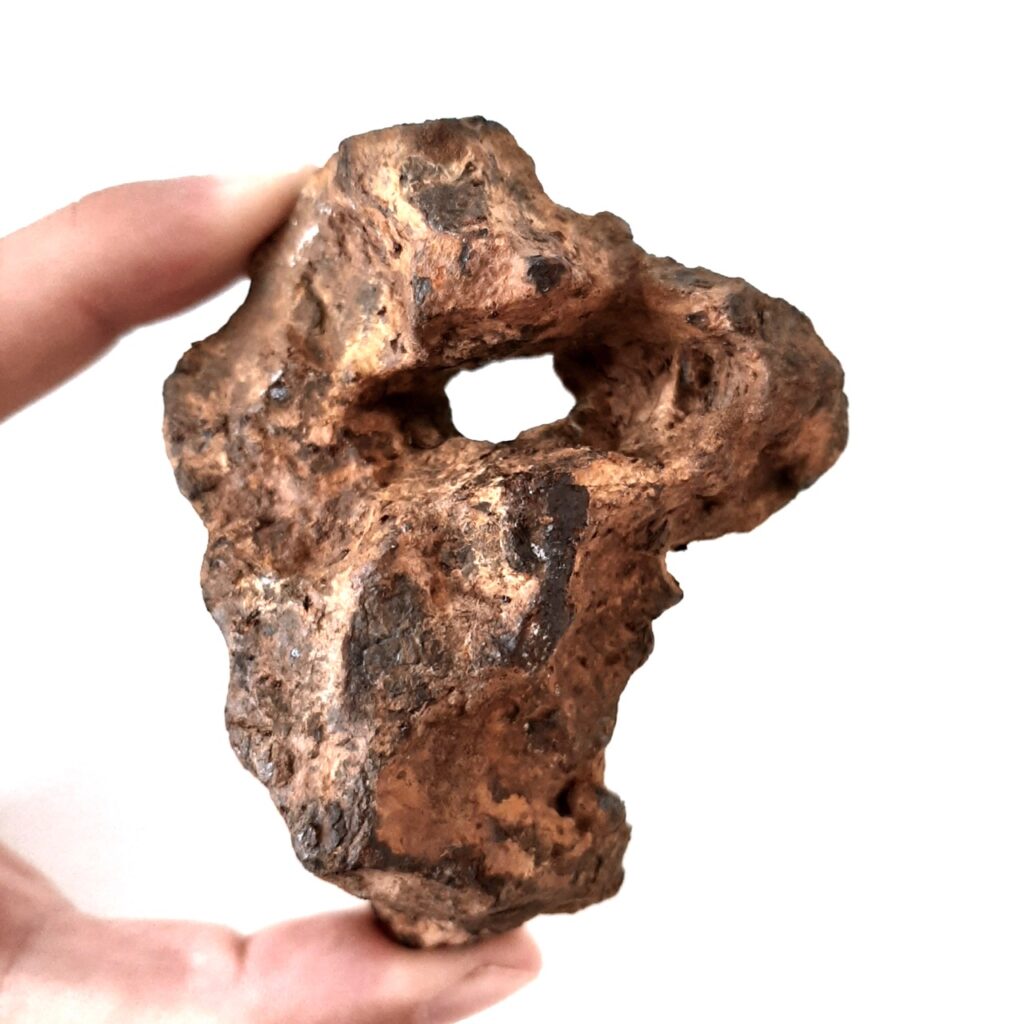
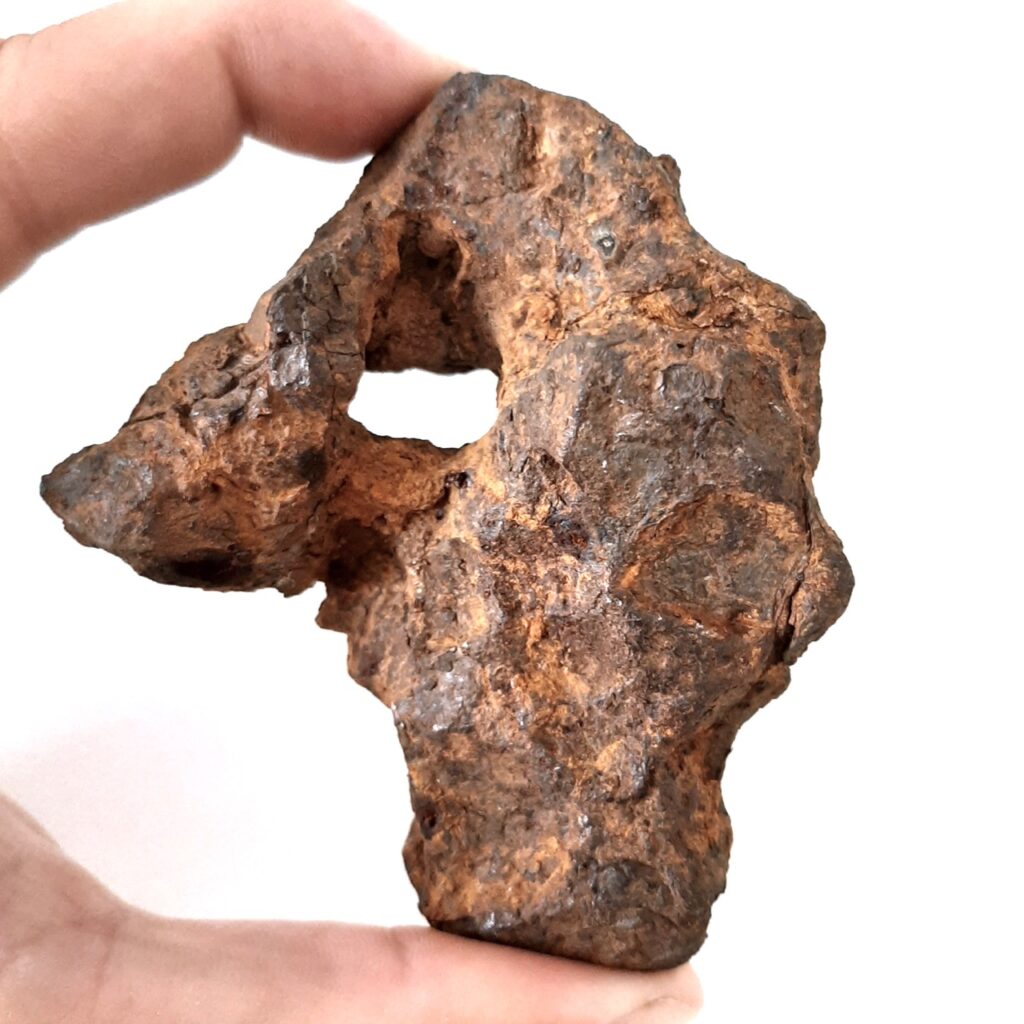
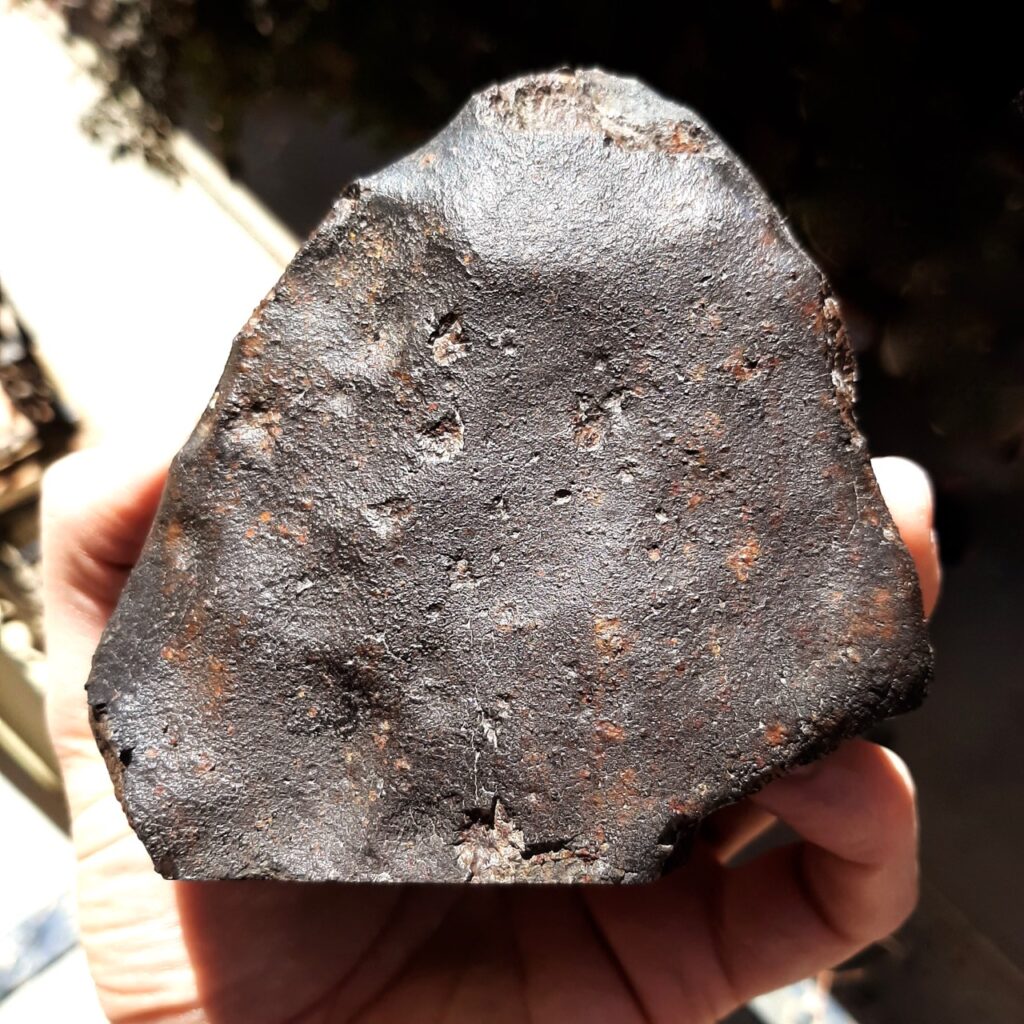
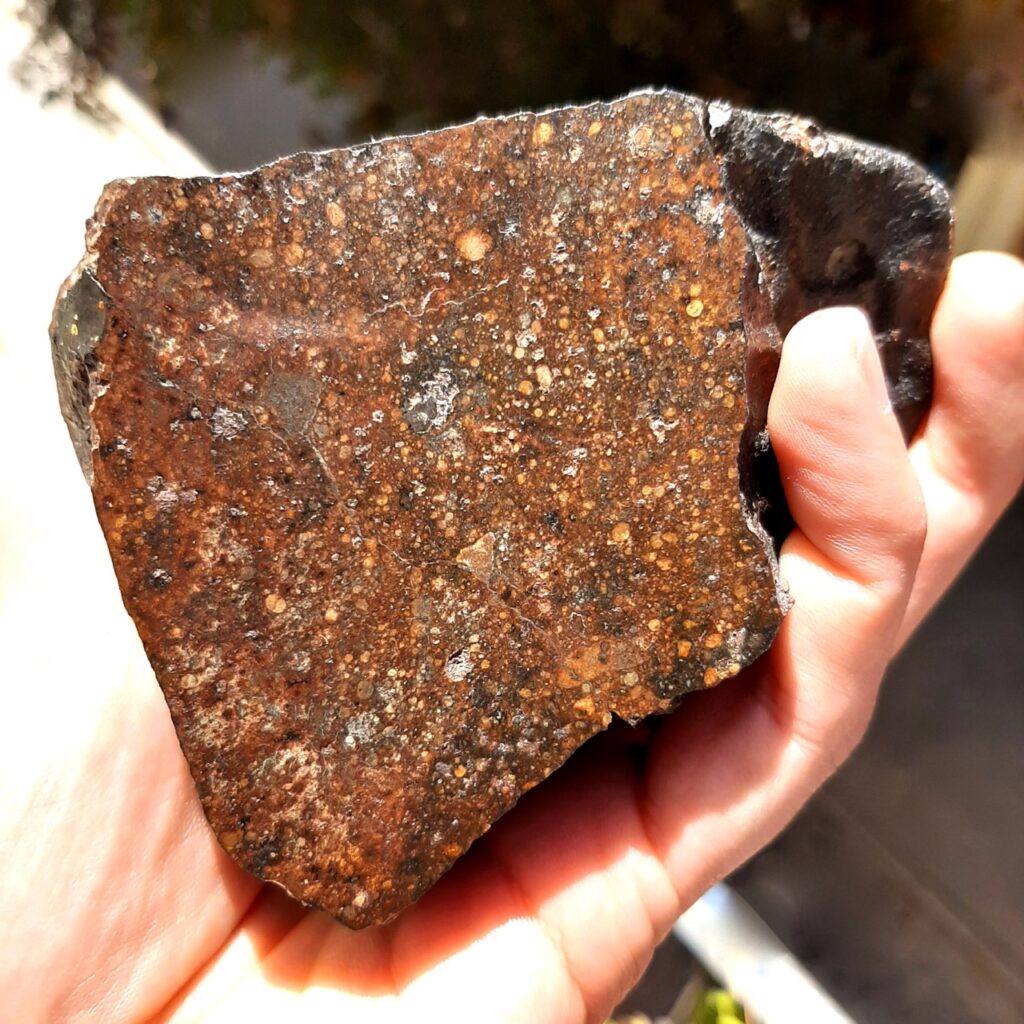
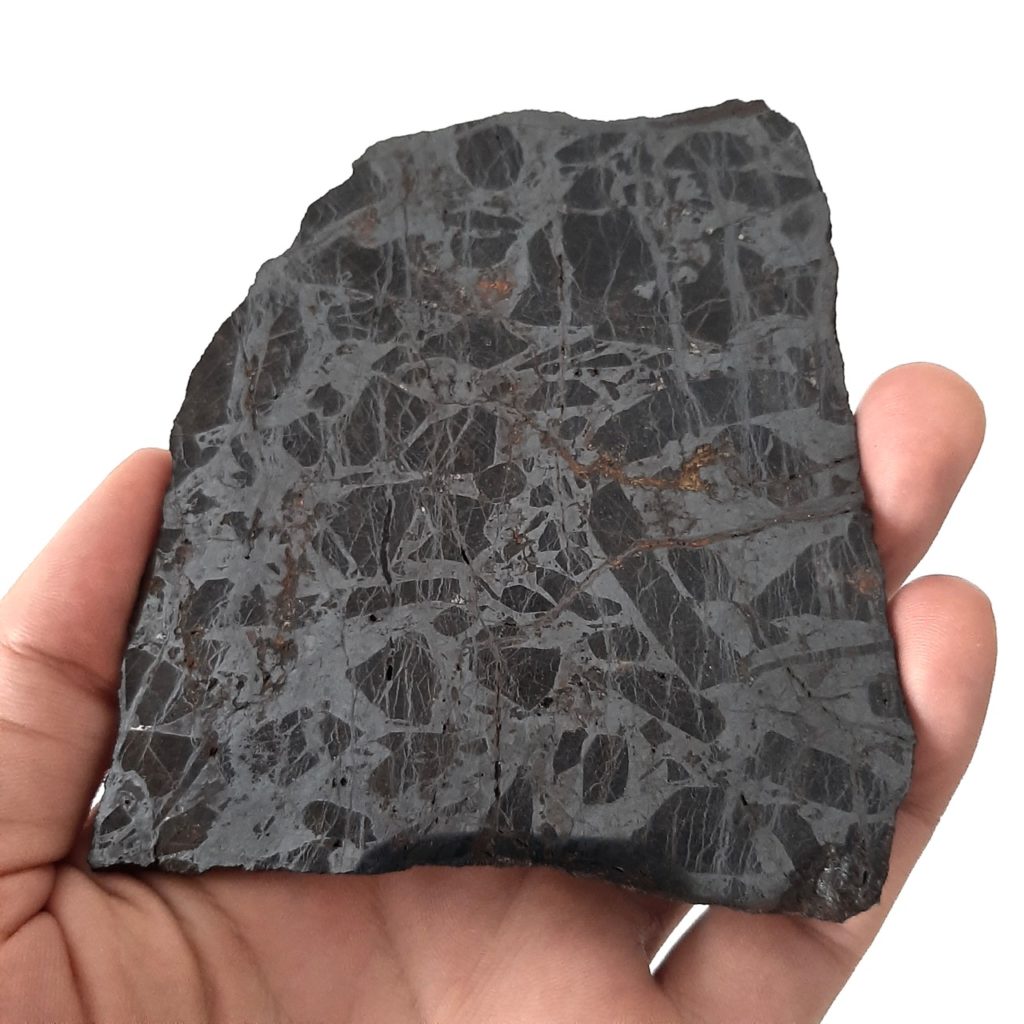
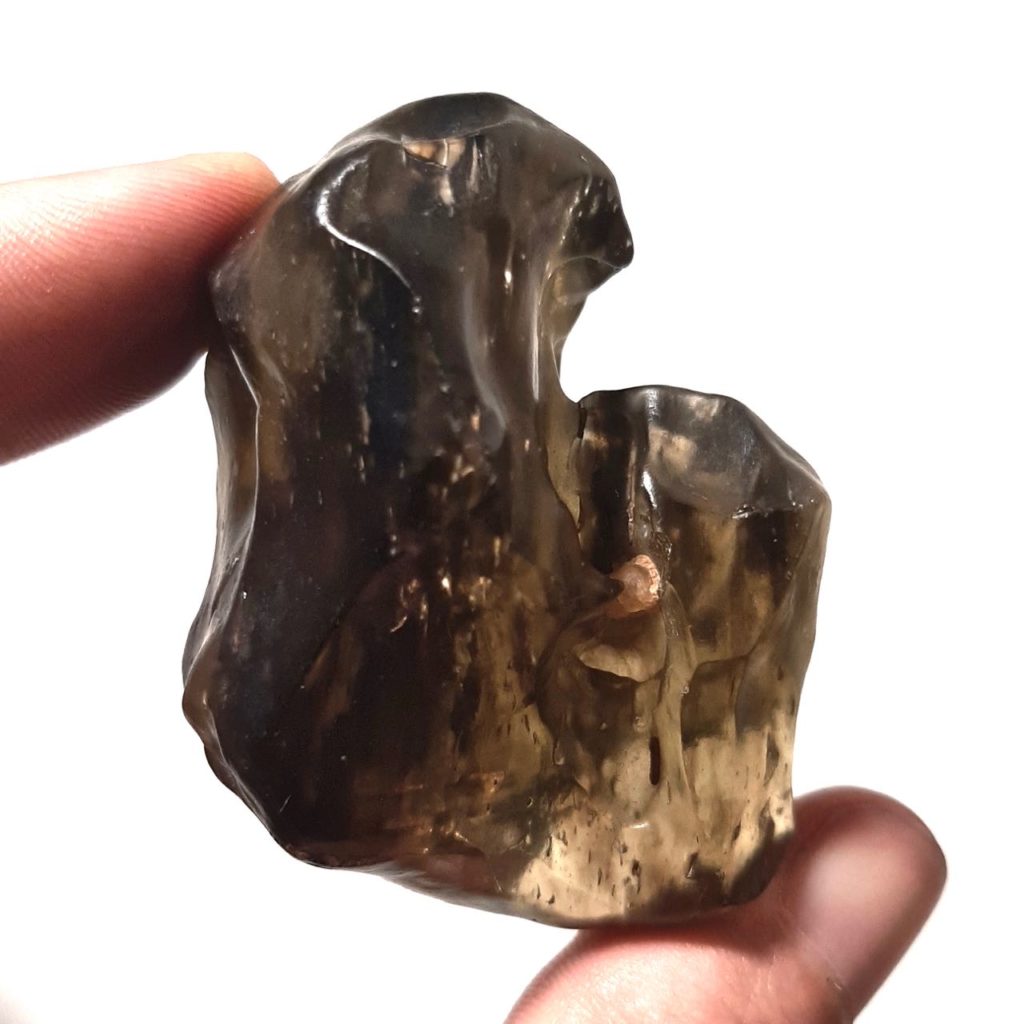
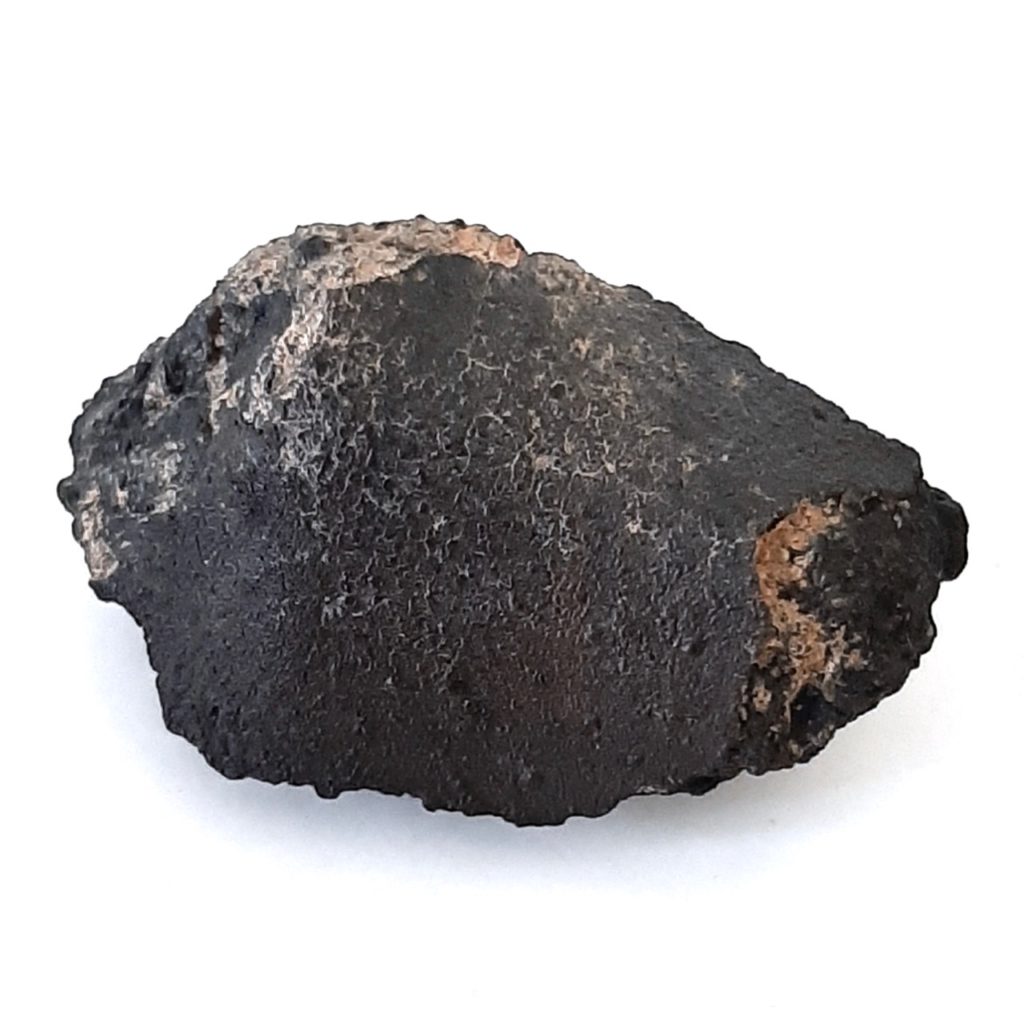
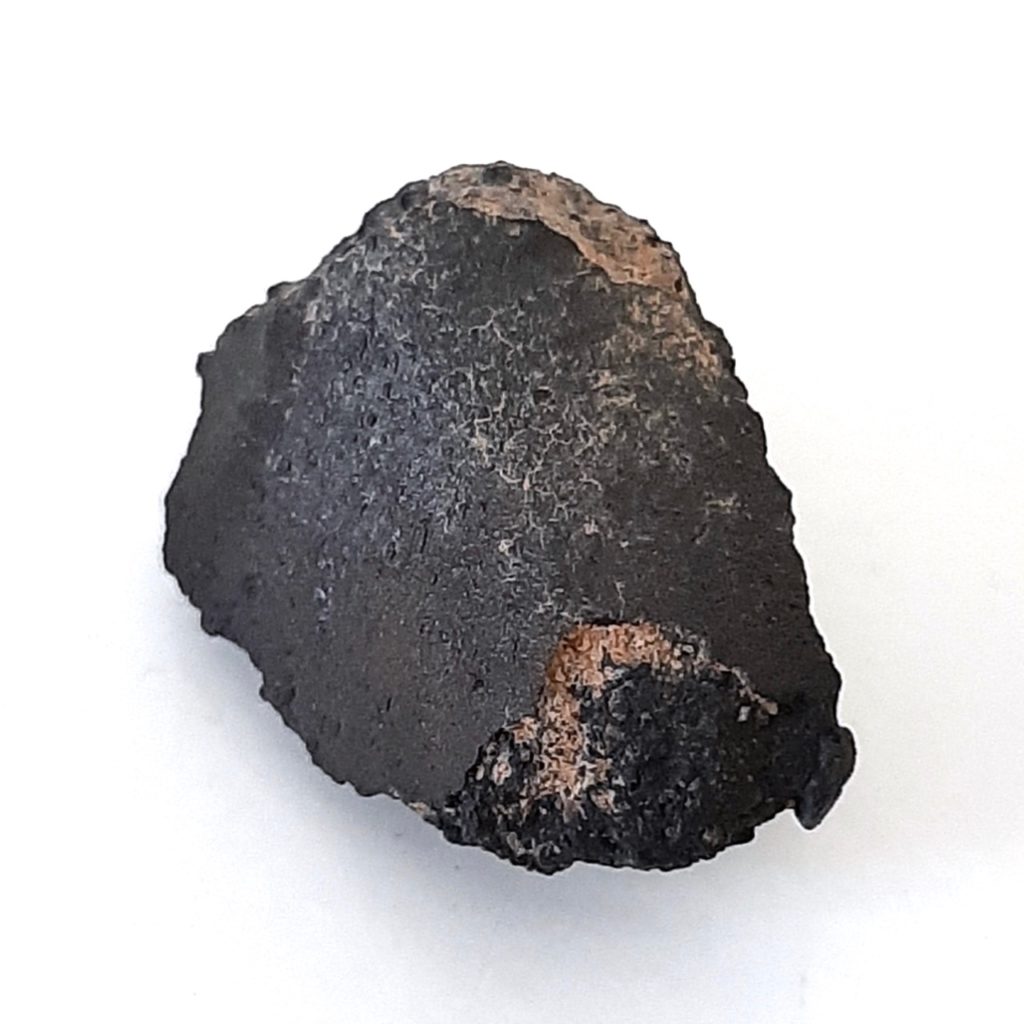
Erg Chech 002. 628 g

Erg Chech 002. 628 g. Collection

Erg Chech 002 was discovered in May 2020 in Algeria at coordinates 26.032°N, 1.611°W. Numerous stones containing distinctive large greenish crystals were found near Bir Ben Takoul, southern Algeria within the Erg Chech sand sea. It has been classified as an ungrouped achondrite and has drawn much attention to scientists and collectors due to its weird-looking aspect. At the beginning many people thought it was not a meteorite but analysis has proven them wrong. Meteorite hunters in the area also noticed that it was an extremely rare type but they always knew it was a meteorite because the landscape is full of dunes and these were the only stones. The stones lack fusion crust, and have an overall relatively coarse grained, tan and beige appearance with sporadic larger green, yellow-green and less commonly yellow-brown crystals. Some minor reddish-brown staining is evident in the groundmass regions. We don’t know asteroids that look like Erg Chech 002. That indicates that almost none of these relics exist anymore. They have crashed together and formed larger planets or been smashed to bits. Analysis have determined that it is an ancient survivor from the crust of a lost cousin planet that formed 23 million years before Earth itself. It dates from just 2 million years after the formation of the solar system – making it more than a million years older than the previous record-holder. It is in fact, the oldest volcanic rock we have ever discovered. It may help us understand the building blocks of planets. This mighty individual weighs 608 grams.

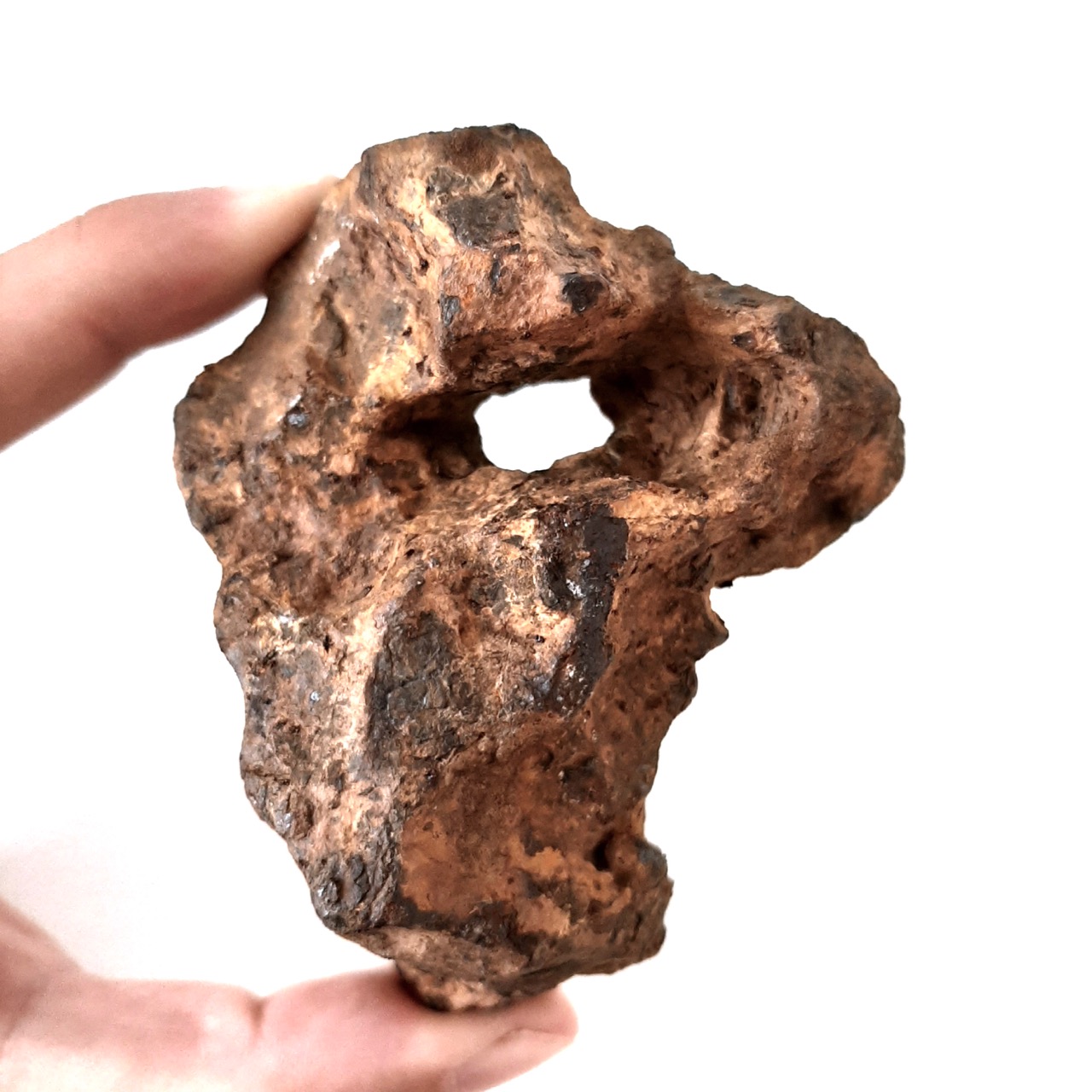
Erg Chech 002. 628 g. Collection

Canyon Diablo. 557 g

Canyon Diablo. 557 g. Collection

Canyon Diablo meteorite fell on the Earth around 50.000 years ago and created one of the most spectacular craters on Earth, The Barringer Crater. It has a diameter of 1,2km and is 170m deep. Meteorites have been found scattered around the crater rim and were already known and used by native Americans to make tools.

Canyon Diablo. 557 g. Collection

SaU 001. 1390 g

SaU 001. 1390 g. Collection

SaU 001 is a classic meteorite from Oman. It was discovered in 2000 and many kilos were collected. Later the Omani government banned meteorite prospection. SaU 001 is an L5 chondrite that can exhibit well conserved fusion crust.

SaU 001. 1390 g. Collection

Huckitta. 128 g

Huckitta. 128 g. Collection

In 1924 a meteorite of 1084 grams was found. 13 years later the main mass of 1411 kg was recovered at Huckitta (22°22’S, 135°46’E). Over 900 kilograms (2,000 lb) of iron shale were also found. This is a full slice of the Huckitta meteorite.

Huckitta. 128 g. Collection

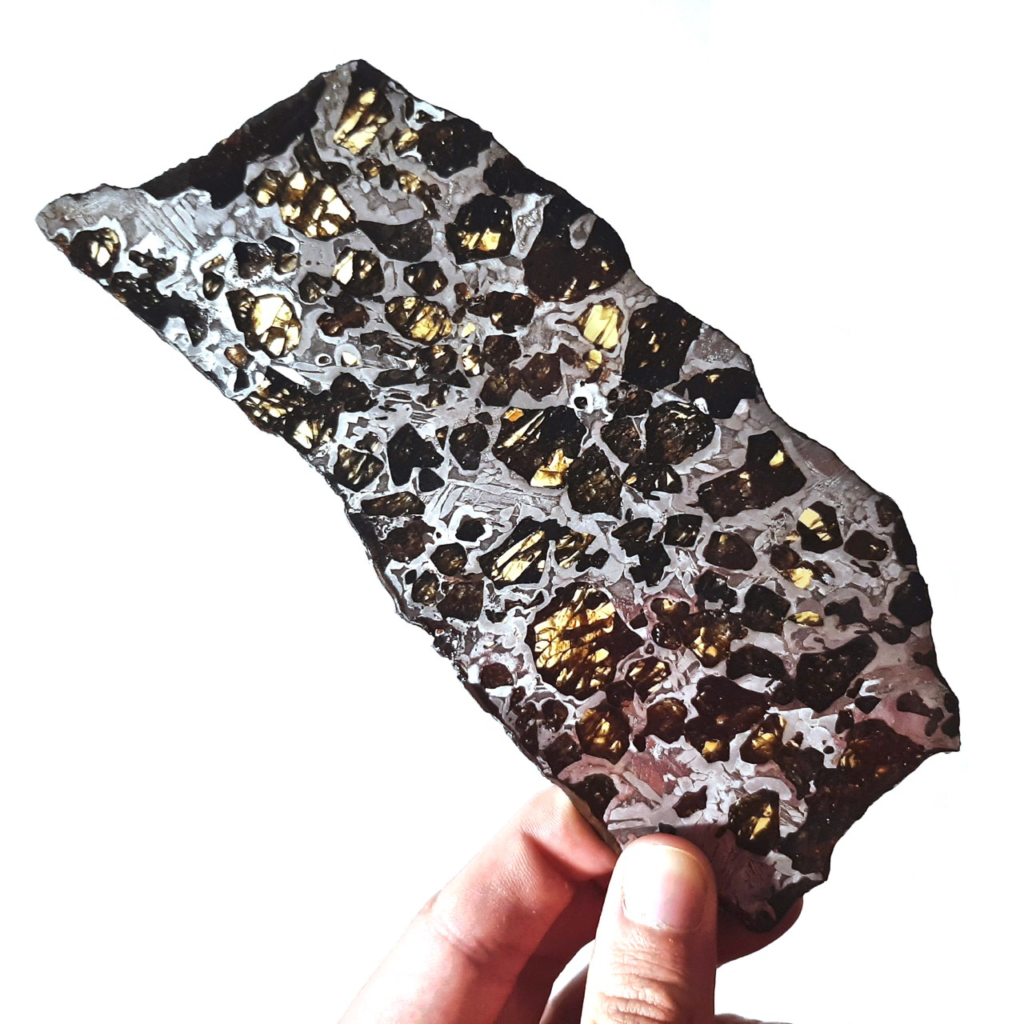
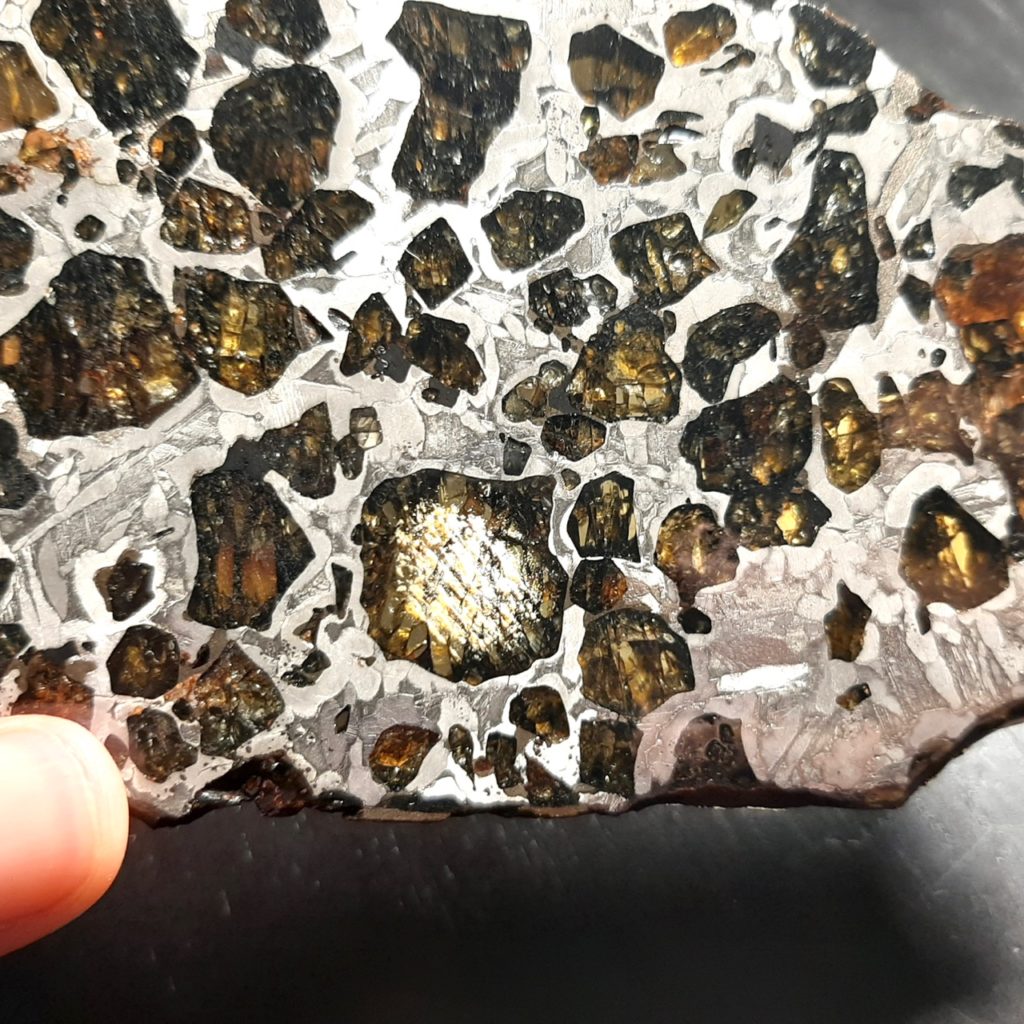
NWA 2957, pallasite. 134 g

NWA 2957, pallasite. 134 g. Collection

This pallasite was found in 1997 in Morocco. Only 1 mass was recovered. It has big and colorful olivines and is one of the best pallasites I have ever seen. This slice has a chatoyant olivine that captivated me.

NWA 2957, pallasite. 134 g. Collection

Sikhote Alin. 4082 g

Sikhote Alin. 4082 g. Collection

This meteorite is one of the biggest meteorite falls in recorded history. It was felt over 300km away with a bolide that the witnesses describe as brighter than the Sun. It crossed the atmosphere at 14km/s above the Sikhote Alin mountains. The fall happened in Russian fast East, close the the China border at 10:38 h local time the 12 February 1947. Sikhote Alin fragmented in its descent until the pressure of the atmosphere was so high that it exploded. The event left mainly 2 types of meteorites, one with smooth surfaces due to the higher time being ablated and one with intricate shapes due to the explosion. This specimen comes from the first fragmentation of the meteor.

Sikhote Alin. 4082 g. Collection

Sericho. 70 kg

Sericho. 70 kg. Collection

In 2016, two brothers were searching for their camels and came across several large, dense stones west of the village of Habaswein and south of Sericho, Kenya. There are no rocks in this area, so they decided they were meteorites. They spent several weeks collecting them with engine hoists and moving them to their homes in Habaswein. Though recognized as meteorites in 2016, the masses had been known to camel-herders for decades. One village elder said that as a child, he and his brothers would play on top of the stones.

Sericho. 70 kg. Collection

Deport. 267 g

Deport. 267 g. Collection

The Deport meteorite was found in Red River County, Texas (USA) in 1926. It is an important old meteorite and one of the very first meteorites that Oscar Monnig cataloged for his collection. Deport is classified as an Iron, Coarse Octahedrite (IAB). As an iron meteorite, it probably comes from the core of asteroids that were destroyed by impacts with other bodies. It is an alloy of iron-nickel mainly although it contains other trace elements. This specimen is among the very first meteorites that Oscar Monnig cataloged for his collection. It was labeled by having a flat spot ground into them and then metal punches were used to apply their catalog number (see the 1AS code). These all were labeled with a number for the locality (number 1 in this case for Deport – the first locality entered into Monnig’s collection) followed by a letter for the order in which the specimen was cataloged starting with the letter A. The curators at Texas Christian University had no idea that Monnig had ever used such a system of labeling until these pieces were discovered in a batch of what were supposed to be Odessa specimens. Luckily they were recognized.

Deport. 267 g. Collection

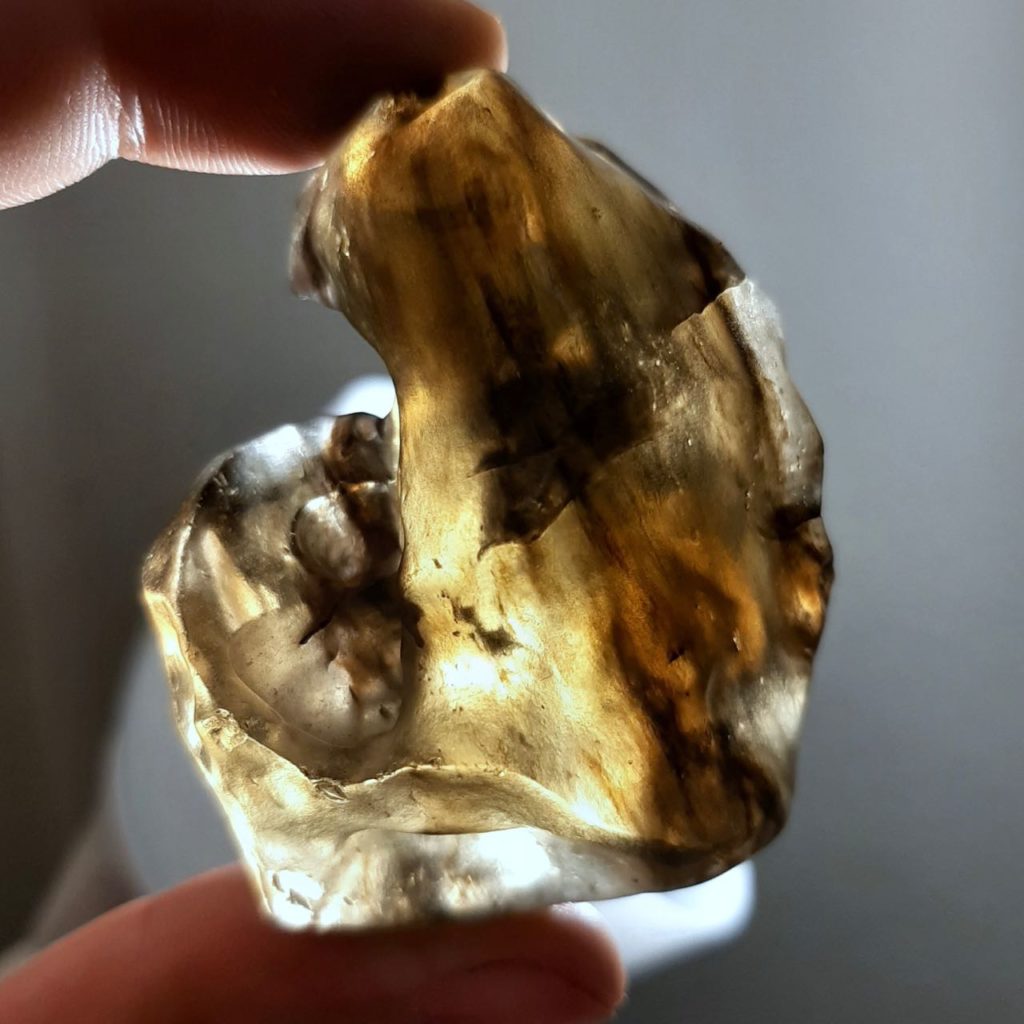
Libyan Desert Glass. 82 g

Libyan Desert Glass. 82 g. Collection

Formed by a massive impact near the Libyan border with Egypt 26 million years ago, this impactite is one of the most sought after type. As a result of the heat and pressure of the impact event, desert sands were melted and formed an impact glass in a a wide range of shapes and colors from yellowish-white to yellow and black-yellow. Ancient Egyptians already knew about these rocks, and they picked them up and used them to make tools and jewelry for the Pharaohs, for example, for the famous Tutankhamun’s pendant with Wadjet. This piece has a rare black color and a natural hole.

Libyan Desert Glass. 82 g. Collection

Chwichiya 002, C3-ung. 9,2 g

Chwichiya 002, C3-ung. 9,2 g. Collection

This meteorite was found near the Haouza village by on 10 June 2018. Much debate has been made on whether this meteorite would be a CM2 or a CK. It was finally classified as a carbonaceous (C3.00, ungrouped) due to its distinctive features.

Chwichiya 002, C3-ung. 9,2 g. Collection
×