Sikhote Alin. 10,3 kg

Sikhote Alin. 10,3 kg. Collection

This meteorite is one of the biggest meteorite falls in recorded history. It was felt over 300km away with a bolide that the witnesses describe as brighter than the Sun. It crossed the atmosphere at 14km/s above the Sikhote Alin mountains. The fall happened in Russian fast East, close the the China border at 10:38 h local time the 12 February 1947.

High-quality piece Sikhote Alin. Hevily regmaglypted in the shown face and the borders. Radial flow lines in a smooth shrapnel back, possibly oriented. It comes from the Fersman Mineralogical Museum of Moscow.

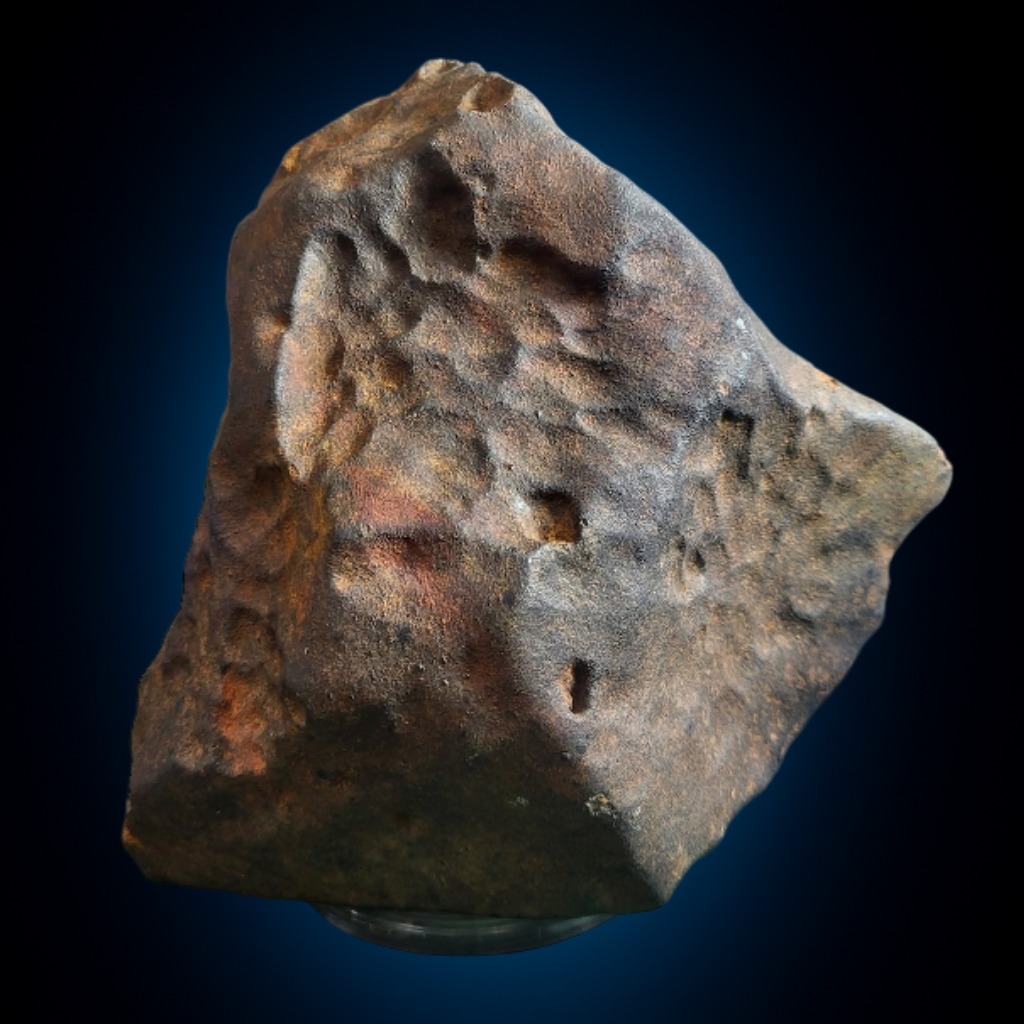
Sikhote Alin. 10,3 kg. Collection

Viñales. Over 10 kg

Viñales. Over 10 kg. Collection

Viñales is a relatively new meteorite. This meteorite fell on February 1st, 2019 in the province of Pinar del Rio, Cuba. Unlike the Chelyabinsk event, in this case no people were injured although a loud sonic boom was heard by the locals and recorded in a video (see link below). Its smoke trail was recorded by several people and it was seen in Cuba and even from the United States, where the weather radars recorded the event. Fragments have been mainly found in Viñales, a town in which people live on tourism and tobacco production. Due to the extensive rains, plants in the area are very tall, which makes finding the meteorites an almost imposible task. Viñales has been officially classified now as an L6 chondrite with shock veins and some inclusions of melt rock (breccia). Video of the smoke trail and sonic boom:
https://www.youtube.com/watch?v=KusbaK-B1DE.

This is the main mass of the Viñales meteorite fall. It is completely covered in fusion crust, with regmaglypts and sits comfortably in several faces. Weight is slightly over 10 kilos.

Viñales. Over 10 kg. Collection

Brahin. 435 g

Brahin. 435 g. Collection

Brahin was first found in 1807 by two farmers in the south of Belarus. It is just a few kilometers away of Chernobyl and this event in 1986 contaminated the strewnfield of the Brahin meteorite. Fortunately only the first cm of soil are contaminated and not the meteorites.

Brahin. 435 g. Collection

Dronino. 777 g

Dronino. 777 g. Collection

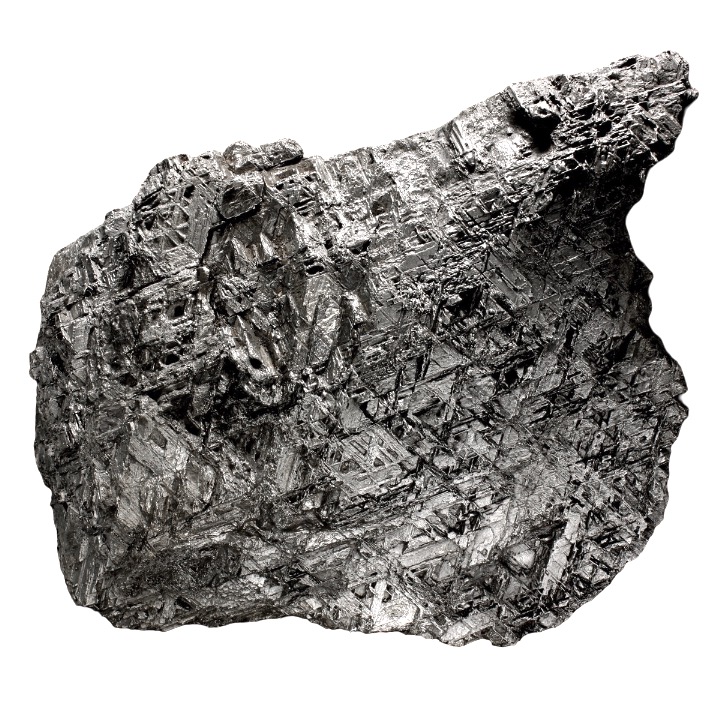
Dronino is an iron meteorite and hence it probably comes from the core of asteroids that were destroyed by impacts with other bodies. It is an alloy of iron-nickel mainly although it contains other trace elements.

Structurally it is an ataxite which means “without structure”. Ataxites have >18% Nickel content and do not show Widmanstatten lines upon etching, hence their name. Most of the meteoric iron is kamacite with minor amounts of taenite.

The first piece was found in 2000 while mushroom collecting. The finder kept it for years and it was definitely identified as a meteorite in 2003 by a Russian museum.

Dronino. 777 g. Collection

NWA 13518, rumurutit. 278 g

NWA 13518, rumurutit. 278 g. Collection

This meteorite is classified as NWA 13518. It was found in 2019 near the border of Algeria and Mali was bought from a Saharaui dealer in Mauritania in March 2020. Rumuruti chondrites (also known as R chondrites) are a very rare type of chondrites. Less than 0,5% of chondrites are classified as R. There was only one observed fall of an R chondrite that left a single piece of just 67 grams. They differ from ordinary chondrites mainly in having most of the metal in the form of sulfides, they are more oxidized and contain little metallic Iron and Nickel. They have a matrix with more dust (about 50%), a higher trace element concentration of Zinc and Selenium and a higher Oxygen-17 ratio than ordinary chondrites. Implanted solar wind is found in more than half of the R chondrites analyzed for noble gases until today. Apparently, R chondrites come from an asteroid’s regolith (surface with loose solid materials). They are called “R” after the Rumuruti meteorite, which fell on 28th January 1934 in the Rift Valley, Kenya.

NWA 13518, rumurutit. 278 g. Collection

NWA 16397, acapulcoite. 6 g

NWA 16397, acapulcoite. 6 g. Collection

Found in Western Sahara in 2022, this slice comes from the only mass found of this rare classification. Acapulcoites are named after the meteorite that fell in Acapulco, Mexico in 1913. They are primitive achondrites, a group whose chemical composition is similar to the composition of chondrites, but their texture is igneous, indicative of melting processes.

NWA 16397, acapulcoite. 6 g. Collection

Chelyabinsk. 279 g

Chelyabinsk. 279 g. Collection

The Chelyabinsk meteorite is one of the most famous meteorites due to the variety of recordings of the fall available. It is estimated than thousands of people were injured due to the meteor’s shock wave that broke many windows and roofs of houses and factories in the city of Chelyabinsk, Russia, on February 15, 2013 at 09:20 local time. 

Chelyabinsk. 279 g. Collection

Viñales. 515 g

Viñales. 515 g. Collection

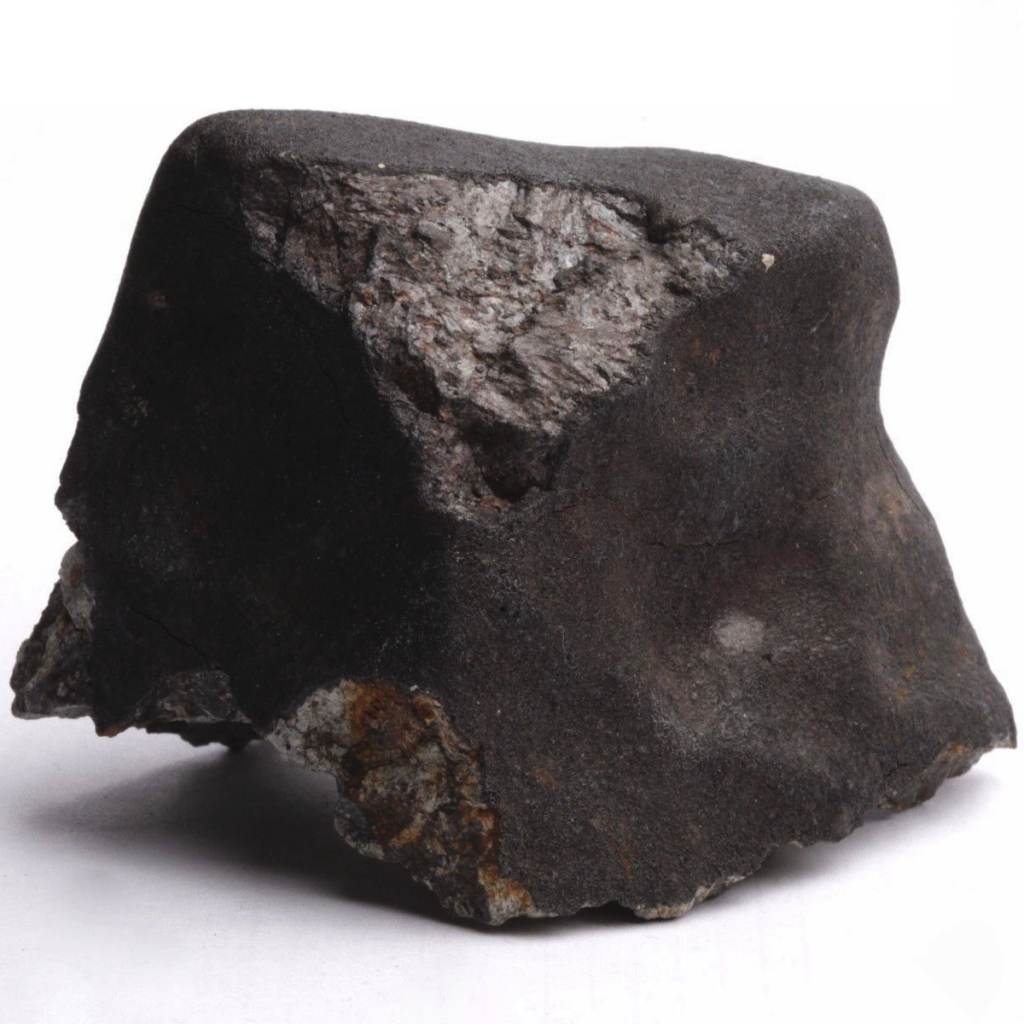
The Viñales meteorite fell on February 1st, 2019 in the province of Pinar del Rio. Unlike the Chelyabinsk event, in this case no people were injured although a loud sonic boom was heard by the locals and recorded in a video. Its smoke trail was recorded by several people and it was seen even from the United States, where the weather radars recorded the event. Fragments have been mainly found in Viñales, a town in which people live on tourism and tobacco production. Due to the extensive rains, plants in the area are very tall, which makes finding the meteorites an almost imposible task. Viñales has been classified now as an L6 chondrite with shock veins. Not so many pieces are over 50 grams and even less are oriented.

Viñales. 515 g. Collection

Chergach. 495 g

Chergach. 495 g. Collection

In July 2007 african nomads reported in Mali a smoke cloud and some detonations but no fireball was seen. This meteorite fall happened on the 2nd or 3rd of July but exact day is undetermined. In autumn and winter of the same year many fragments were finally found with a total known weight of about 100 kilograms. This meteorite is classified as a chondrite H5, S3, W0. 

Chergach. 495 g. Collection

Muonionalusta. 19 kg

Muonionalusta. 19 kg. Collection

The Muonionalusta meteorite has been estimated to be on Earth for 1 million years. It fell in current northern Sweden, near the border with Finland. It was discovered in 1906 when workers were moving earth for the construction of a road. After that the meteorite was forgotten for decades until a new road was constructed a new meteorites appeared. A worker took a weird-looking rock to a mineral exhibition and one person identified it as a meteorite again. The typical Muonionalusta meteorite has rounded shapes caused by the several glaciar movements that have transported them for kilometers. It is classified as an IVA iron meteorite.

Muonionalusta. 19 kg. Collection
×